




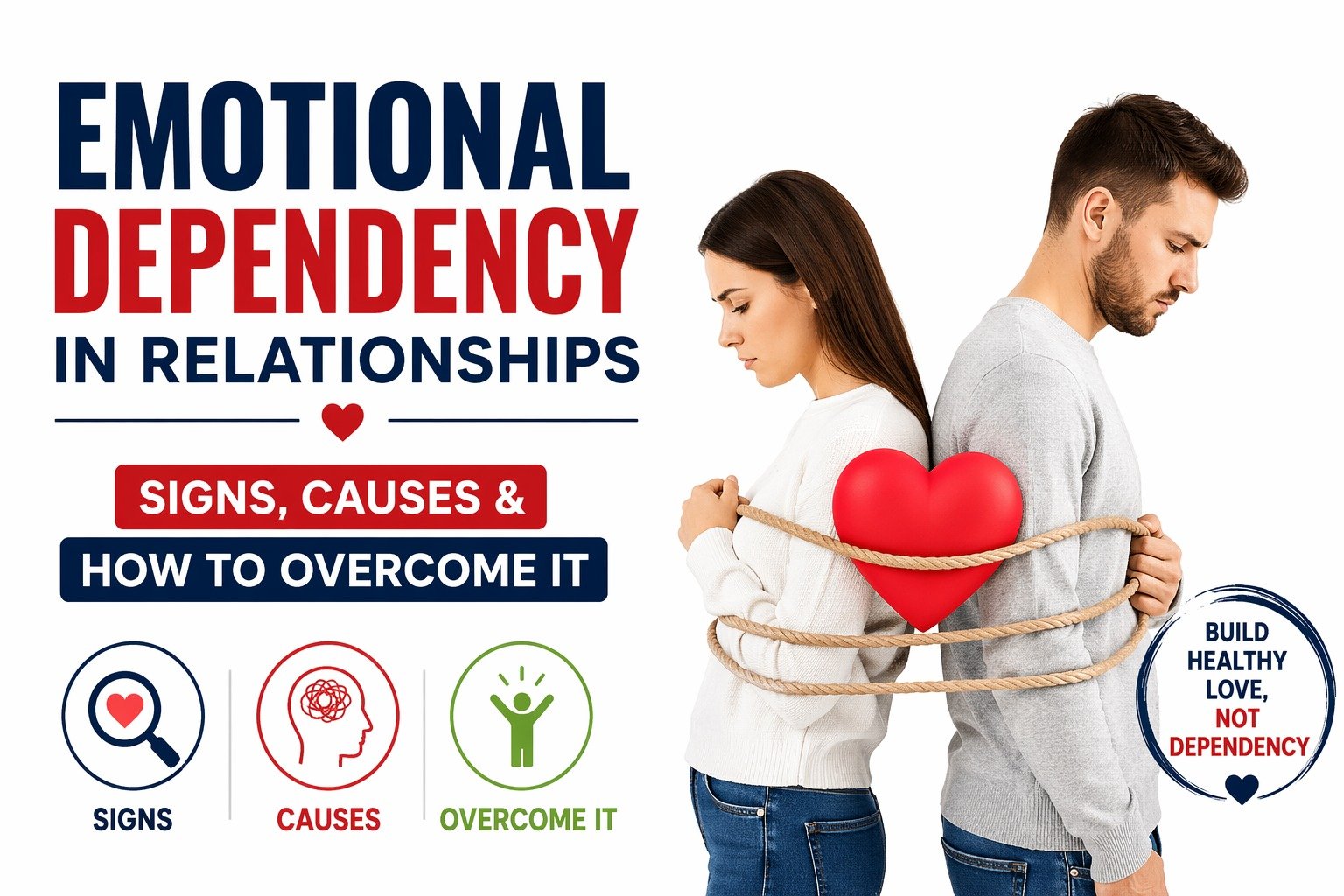

Emotional Dependency in Relationships: Signs, Causes & How to Overcome It
In today’s emotionally demanding world, relationships are meant to provide support, comfort, and connection. However, when emotional attachment becomes excessive, it can lead to an unhealthy pattern known as emotional dependency in relationships.
Many people mistake emotional dependency for love. But in reality, emotional dependency in relationships often stems from insecurity, fear of abandonment, and a lack of emotional independence. Over time, it can negatively impact both your mental well-being and the quality of your relationship.
At Healing Thoughts and Souls, individuals are supported in understanding these patterns and learning how to build emotionally balanced and fulfilling relationships.
What is Emotional Dependency in Relationships?
Emotional dependency in relationships occurs when one partner relies heavily on the other for validation, happiness, and emotional stability. Instead of a balanced connection, the relationship becomes one-sided and emotionally draining.
An emotionally dependent partner may feel incomplete without their partner and constantly seek reassurance, leading to anxiety, overthinking, and fear of rejection.
Signs of Emotional Dependency
Recognizing the signs of emotional dependency early can help prevent deeper emotional challenges.
1. Constant Need for Reassurance
You frequently seek approval or validation from your partner to feel secure.
2. Fear of Being Alone
Being alone feels uncomfortable or overwhelming, even if the relationship is not fulfilling.
3. Loss of Personal Identity
Your life begins to revolve around your partner, and your own goals and interests take a backseat.
4. Emotional Dependence on Partner’s Actions
Your mood is directly affected by how your partner behaves or responds to you.
5. Jealousy and Insecurity
You often fear losing your partner, even without clear reasons.
These signs of emotional dependency can gradually impact your self-esteem and relationship satisfaction.
Causes of Emotional Dependency
Understanding the root causes of emotional dependency in relationships is essential for meaningful change:
1. Low Self-Esteem
A lack of confidence can make individuals depend on others for validation.
2. Past Emotional Experiences
Previous relationship trauma, neglect, or abandonment can create fear-based attachment patterns.
3. Lack of Emotional Support Growing Up
Unmet emotional needs in childhood can carry forward into adult relationships.
4. Codependent Relationship Patterns
Some relationships unintentionally encourage emotional reliance, making it difficult to break free.
Impact on Relationships
Emotional dependency in relationships can affect both partners in several ways:
- Creates emotional pressure and imbalance
- Leads to frequent misunderstandings
- Reduces independence and personal growth
- May result in clingy or controlling behavior
Over time, this dynamic can turn a loving relationship into an emotionally exhausting one.
How to Overcome Emotional Dependency
If you’re wondering how to overcome emotional dependency, it begins with awareness and consistent self-work.
1. Develop Self-Awareness
Understand your emotional triggers and patterns of dependency.
2. Build Self-Worth
Focus on your strengths and achievements. Your value is not defined by someone else.
3. Set Healthy Boundaries
Creating emotional boundaries helps maintain individuality within a relationship.
4. Reconnect with Yourself
Spend time on personal interests, hobbies, and social connections outside the relationship.
5. Practice Emotional Independence
Learn to manage your emotions without relying entirely on your partner.
6. Seek Professional Support
Working with a qualified relationship therapist in Gurgaon or a trained counselling psychologist can help you understand deeper emotional patterns and build healthier coping strategies.
At Healing Thoughts and Souls, the focus is on helping individuals move from emotional dependence to emotional strength through guided therapeutic support.
By applying these steps, you can effectively learn how to overcome emotional dependency and create a healthier relationship dynamic.
When Should You Seek Help?
If emotional dependency in relationships starts affecting your confidence, emotional stability, or daily life, it may be time to seek guidance from a therapist or counselling psychologist. Professional support can help you build emotional resilience and healthier relationship patterns.
Conclusion
Emotional dependency in relationships may feel like deep attachment, but it often comes from fear rather than genuine emotional security. A healthy relationship is built on mutual respect, trust, and independence.
By recognizing the signs of emotional dependency, understanding its causes, and taking steps toward emotional independence, you can build stronger, more balanced relationships.
True connection is not about needing someone to feel complete—it’s about sharing your life while being secure within yourself.
FAQs
1. What is emotional dependency in relationships?
It is when a person relies heavily on their partner for emotional support, validation, and self-worth.
2. What are the signs of emotional dependency?
Common signs include fear of being alone, constant reassurance-seeking, insecurity, and loss of personal identity.
3. Can emotional dependency harm relationships?
Yes, it can create imbalance, emotional stress, and reduce relationship satisfaction over time.
4. How to overcome emotional dependency?
It involves building self-awareness, self-confidence, setting boundaries, and seeking help from a therapist if needed.
5. Who should I consult for emotional dependency issues?
A qualified counselling psychologist or therapist can provide the right guidance and support.