









By Sonali Mangal, Counselling Psychologist | Healing Thoughts & Souls, Gurgaon
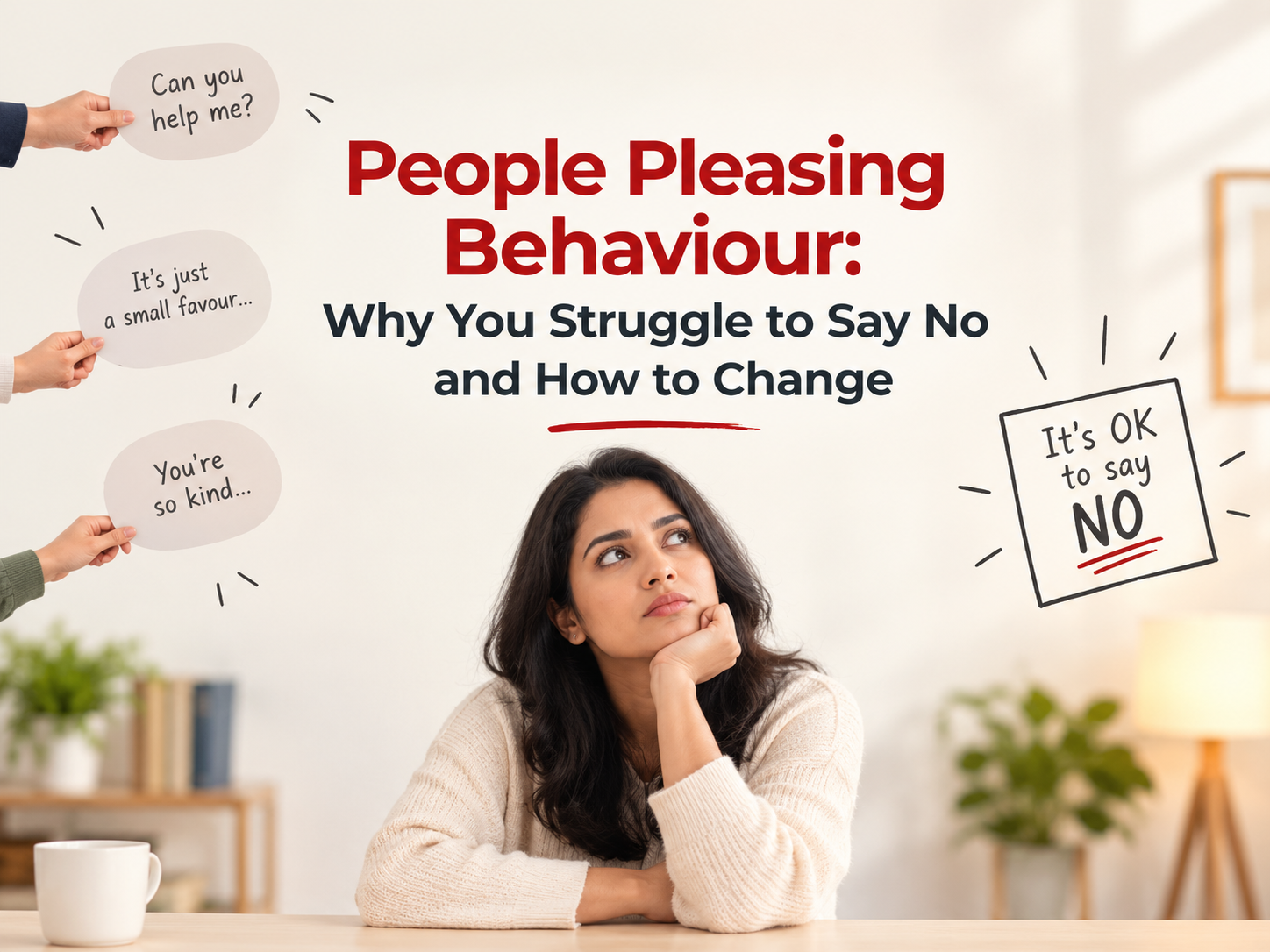
Have you ever said “yes” while your heart was saying “no”? Maybe you stayed late at work again, or agreed to a plan you did not want. If this sounds like you, you are not alone. People pleasing behaviour is very common, and most people do not realise how much it drains them.
At Healing Thoughts & Souls, Sonali Mangal sees this pattern often in her Gurgaon clinic and in online sessions. Here, we will keep things simple: why people pleasing behaviour starts, and how to change it.
What Is People Pleasing Behaviour?
People pleasing behaviour means putting other people’s needs, opinions and comfort above your own, again and again. You do it to avoid conflict, to be liked, or to escape guilt.
Being helpful is good. The problem starts when it becomes a habit you cannot control. A kind person can say no and still be kind. A people pleaser feels they are not allowed to.
Signs of a People Pleaser
Not sure if this is you? Here are the most common signs of a people pleaser:
- You say yes first and think later.
- You feel guilty after saying no, even for small things.
- You hide your real opinion to keep the peace.
- You feel responsible for how others feel.
- You feel tired, angry or used, but you keep quiet.
Why Am I a People Pleaser? Common Reasons
Many people ask, “why am I a people pleaser?” The honest answer: nobody is born this way. It is a learned habit that usually starts early. Common reasons are:
- Childhood: you got love or praise only when you were “good” or did what you were told.
- Fear of rejection: you worry people will leave or dislike you if you refuse.
- Family and social pressure: fear of “what will people say” makes saying no feel wrong.
- Low self-worth: you believe your value comes from being useful.
People Pleasing Psychology: What Is Going On Inside?
In people pleasing psychology, this habit is often seen as a survival skill. As a child, keeping others happy may have kept you safe, and your mind still follows that old rule. Some psychologists call this a “fawn” response: calming a stressful situation by pleasing others.
It is hard to stop because every yes brings relief, and that relief teaches your brain to repeat it. Over time, people pleasing behaviour feels like your personality, when it is really a pattern you can change.
People Pleasing and Anxiety: The Hidden Link
People pleasing and anxiety often go hand in hand. When you fear someone’s anger or disappointment, your mind starts overthinking: “What if they get upset?” Saying yes feels like a quick way to switch that worry off.
But in the long run, it feeds the anxiety. You carry more tasks, get less rest, and worry more about letting people down. This can show up as stress, poor sleep or burnout. The World Health Organization explains that anxiety is common, and that help is available. You do not have to handle it alone.
A Story of People Pleasing Behaviour We See Often
Take a common example. Call her Riya (a general example based on common patterns, not a real client). Riya is 29 and works in Gurgaon. Her team keeps handing her extra work because she never refuses.
One evening, she sat in her car and cried, too tired to drive home, yet she had just said yes to one more favour. In counselling, she understood something: she was not scared of the word “no”. She was scared of what it might say about her.
She began small, with “let me check and get back to you.” Slowly, she learned that most people adjust.
How to Stop People Pleasing: 6 Simple Steps
- Pause before you answer. Say, “Let me think about it.” You do not have to reply right away.
- Start small. Practise saying no in low-stress situations first.
- Ask yourself one question. “Do I really want this, or am I scared of what happens if I refuse?”
- Keep your answer short. A polite, short no is enough.
- Do not trust guilt too quickly. Guilt does not always mean you did something wrong. Often, it is the old habit speaking.
- Take support. Change is easier when someone helps you find the root cause.
How to Set Boundaries With People
Learning how to set boundaries with people is the heart of change. A boundary is a clear message about what you can and cannot do. It is not rude or selfish. Try these:
- Be calm and clear: “I cannot take this on this week.”
- Use “I” statements: “I need some rest this weekend.”
- Offer a choice if you want to: “I cannot do Friday, but I can help on Monday.”
- Expect some pushback: people are used to your yes.
When to Talk to a Counselling Psychologist About People Pleasing Behaviour
If people pleasing behaviour is affecting your sleep, work, relationships or mood, do not wait for it to get worse. Counselling can help you understand why you say yes and give you practical tools.
At Healing Thoughts & Souls, Sonali Mangal is a Counselling Psychologist with over 9 years of experience. She works with stress, anxiety and overthinking, confidence and self-worth, and relationship issues. Sessions are available in person at Sector 46, Gurgaon, and online for clients anywhere in India.
For urgent support, the Government of India’s Tele-MANAS helpline (14416) offers free, 24×7 mental health support.
Frequently Asked Questions (FAQs)
Is people pleasing a mental illness?
No. People pleasing behaviour is not a diagnosis on its own. It can be linked to anxiety, low self-esteem or past experiences, and it can be changed with support.
Can I stop people pleasing on my own?
Many people progress with small daily steps. If the habit feels too strong, a counsellor can help with the root cause.
How long does it take to change people pleasing behaviour?
There is no fixed time. It depends on the person and how regularly you practise. Small changes can show early.
Do you offer online counselling for people pleasing outside Gurgaon?
Yes. Healing Thoughts & Souls offers online consultations across India, so you can work on people pleasing behaviour from any city.
Conclusion: You Are Allowed to Say No
People pleasing behaviour does not make you weak. It shows that you care deeply. But caring for others should never mean losing yourself. When you pause, set boundaries and listen to your own needs, your relationships do not break. They become more honest.
If you are ready to change people pleasing behaviour, take the first step today. Book a 15-minute free consultation with Sonali Mangal at Healing Thoughts & Souls.
- Call / WhatsApp: 9990906123
- Book online: Book an Appointment
- Find us on Google: Google Business Profile
- More reading: Read more blogs