








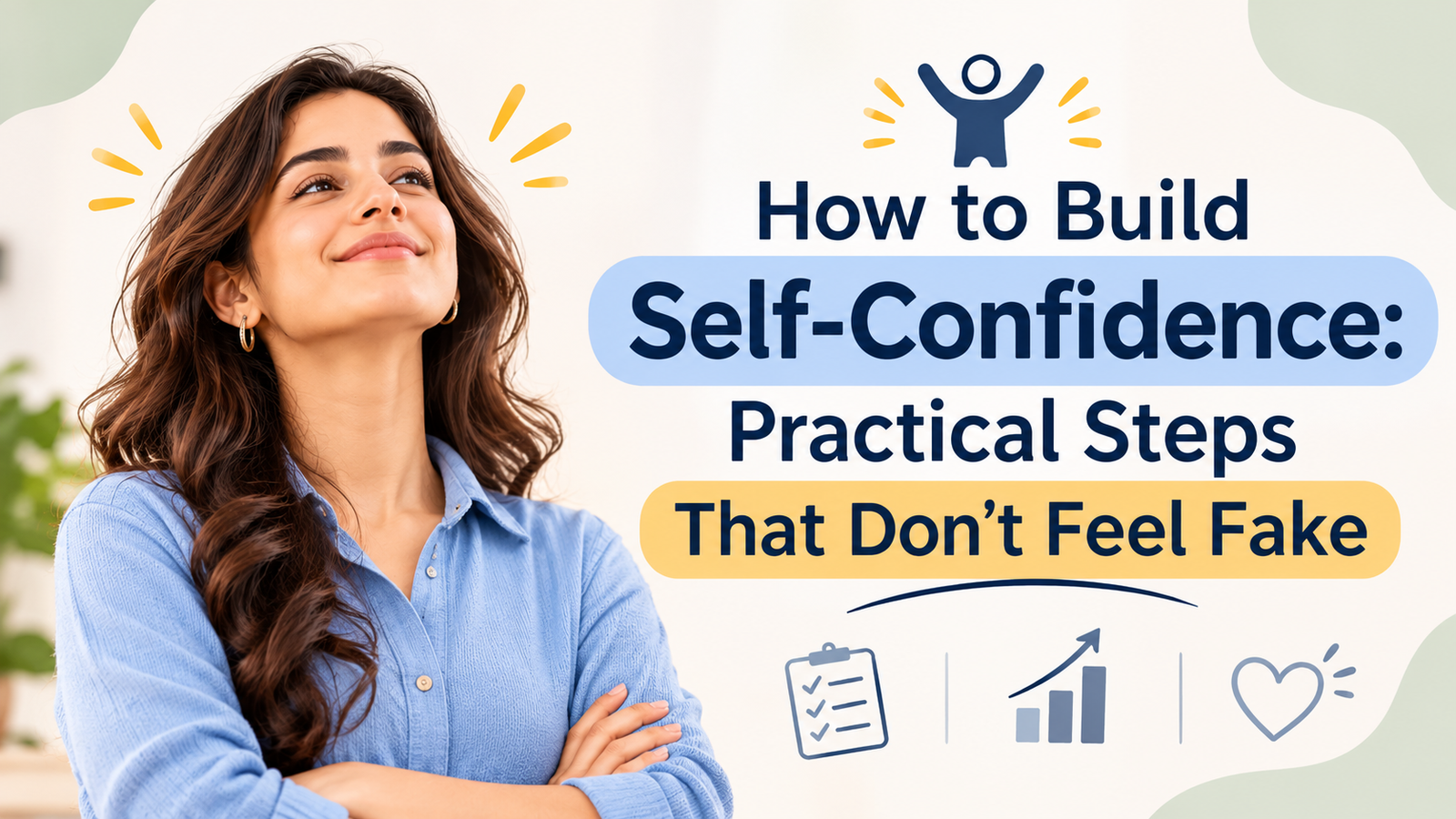

Riya, a 28-year-old marketing executive, always had the right answer in meetings. She rehearsed it twice in her head, then stayed silent. A minute later, a colleague said the same thing and got the credit. Riya is a composite example, not a real client, but her story is familiar to many people. If you have wondered how to build self-confidence without faking it, this guide is for you.
I’m Sonali Mangal, a counselling psychologist with over nine years of experience (know more about me). In my sessions, I see one pattern again and again: confidence is not a trait some people are born with. It is a skill, and it grows through small, repeated experiences.
What Is Self-Confidence, Really?
Self-confidence is trusting yourself to handle what comes, including mistakes. Confident people still feel nervous. The difference is that they don’t treat nervousness as proof that they can’t do it. Real confidence building is not about a loud voice or a perfect performance. It is about a steady, honest relationship with yourself.
Signs of Low Self-Confidence
Low self-confidence often looks like this:
- Doubting yourself before speaking, deciding or applying
- Comparing yourself with others and feeling behind
- Saying yes when you want to say no
- Avoiding opportunities because you might fail
- Replaying small mistakes for day
If two or three of these feel familiar, you are not broken. You have learned a pattern, and patterns can change.
Why Self-Confidence Drops
Low confidence usually has roots. Harsh criticism in childhood, constant comparison, perfectionism, past rejection and long periods of stress can all shake how you see yourself. Chronic stress and overthinking make it worse, because a tired, anxious mind finds more reasons to doubt you. If stress is a big part of your story, you can read about stress, anxiety and anger counselling.
How to Build Self-Confidence: 8 Practical Steps
These self-confidence tips are simple enough to start this week.
1. Keep small promises to yourself
Confidence grows when you keep your word to yourself. Choose one small task, like a 10-minute walk or one pending email, and do it daily. These small wins teach your mind that you are reliable.
2. Change how you talk to yourself
Notice your inner critic. Would you speak to a friend that way? Replace “I’m useless” with “That was hard, and I can learn from it.” This is not fake positivity. It is fair and accurate self-talk.
3. Keep a “done list”
Each night, write three things you handled today, however small. Over a few weeks, this builds real evidence against the belief that you never get anything right.
4. Act a little scared
Waiting to feel confident before acting usually backfires. Confidence follows action. Pick something slightly uncomfortable, like sharing one idea in a meeting, and do it before you feel ready.
5. Practise saying no
Boundaries are a confidence skill. Start with low-stakes situations. A simple “I can’t take that on right now” is enough. Every boundary you hold tells you that your needs matter.
6. Compare with your past self
Social media shows highlights, not struggles. Measure your progress against who you were three months ago, not against someone else’s best moments.
7. Look after the basics
Sleep, movement and regular meals shape how steady you feel. It is hard to feel capable when you are exhausted. Small routines make every other step easier to follow.
8. Learn from mistakes, then stop
After a mistake, ask two questions: “What happened?” and “What will I do differently?” Then let it go. Learning without self-punishment builds resilience.
What happened to Riya? She began with step 4. In the next meeting, she shared one idea, her voice slightly shaky. Nothing went wrong. Over the following month, speaking up got a little easier each time. That is how confidence is really built.
How Low Confidence Affects Relationships
Low confidence rarely stays at work. It can make you avoid difficult conversations, accept less than you deserve, or depend on constant reassurance from your partner. Building confidence helps you express your needs clearly and handle disagreements calmly. If this is a pattern in your marriage or relationship, relationship counselling can help you and your partner communicate better.
When Self-Help Isn’t Enough
Sometimes low self-confidence runs deeper. Consider speaking to a psychologist if:
- You have tried these steps and still feel stuck
- Self-doubt affects your work, relationships or sleep
- You feel anxious or low most days
- Old criticism still shapes how you see yourself
If you are looking for a psychologist in Gurgaon for confidence building, counselling gives you a private, non-judgmental space to understand where the doubt began. If you ever feel hopeless or have thoughts of harming yourself, please contact a local emergency service or helpline immediately.
How Counselling Helps With Confidence
In sessions with me, we look at your self-talk, identify the beliefs behind it, work through the experiences that shaped them, and build practical habits step by step. Counselling for confidence is available in person at Sector 46, Gurgaon, and as online counselling if you prefer to start from home. You can also explore more guides on our blog.
Frequently Asked Questions
Can self-confidence really be built?
Yes. Confidence is a skill that grows with practice, experience and kinder self-talk.
How long does it take to build self-confidence?
Small changes often appear within a few weeks of regular practice. Deeper beliefs may take longer, which is normal.
Is low self-confidence a mental health problem?
Not by itself. But it can go along with anxiety or low mood. If it affects your daily life, speak to a professional.
Can online counselling help with low self-confidence?
Yes. Many people feel at ease in online sessions, and the approach works well for confidence building.
When should I see a psychologist for confidence issues?
When self-doubt keeps stopping you from living the way you want, or when you feel stuck despite trying on your own.
Conclusion
Learning how to build self-confidence is not about becoming someone else. It is about keeping small promises, speaking to yourself with fairness, and acting even when you feel unsure. Start with one step this week. If you feel stuck, support is available, and asking for it is a sign of strength.
Take the First Step
Ready to feel more sure of yourself? Book a 15-minute free consultation with Sonali Mangal, in person in Gurgaon or online, and take the first step towards lasting confidence.
Book an Appointment | Call: 9990906123 | Visit Healing Thoughts & Souls